Exercise & Health Science | Associate of Science
Build a Foundation for Exercise, Fitness, and Health Careers

Exercise & Health Science Program Overview

Students interested in exercise, fitness, wellness, and health promotion can develop an academic foundation and practical skills through the Associate of Science in Exercise & Health Science at Quincy College. Coursework builds knowledge of human movement, exercise, nutrition, fitness, and health while preparing students for entry-level professional roles and continued education.

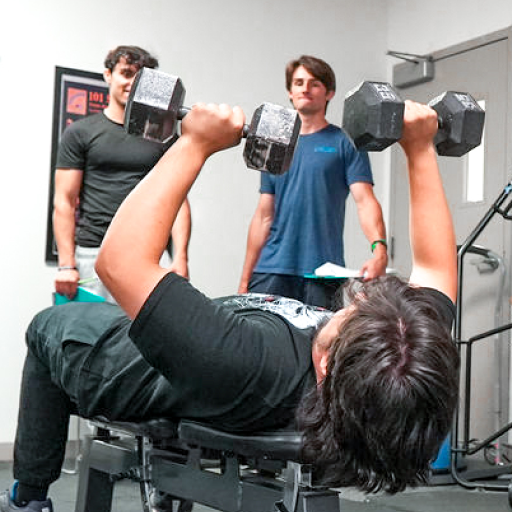
Classroom and laboratory experiences focus on fitness assessment, exercise programming, and exercise techniques, with additional coursework in functional anatomy, nutrition, injury prevention, and community wellness. Students examine how the body responds to exercise, explore factors that affect health and physical activity, and develop approaches for supporting fitness and wellness goals among diverse populations.

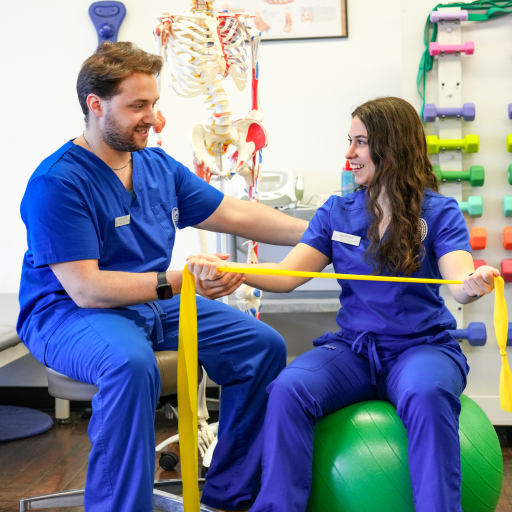
Hands-on laboratory work and supervised practicum and internship experiences give students opportunities to apply what they learn in exercise and health settings. Students can gain practical experience through Quincy College’s laboratory facilities and through experiential learning opportunities with partner organizations across the South Shore, including fitness centers, hospitals and clinical settings, rehabilitation facilities, and professional sports organizations. Through fitness testing, exercise program design, health coaching, and athletic development, students develop practical skills while applying foundational principles to real-world exercise and health situations.

For students balancing college with work or other responsibilities, the program offers in-person and hybrid options, combining online and in-person coursework. Graduates can pursue entry-level professional roles in exercise, fitness, and wellness or continue into a bachelor’s degree program in exercise science, kinesiology, health science, or a related field. The program also provides preparation for continued study and professional certification pathways aligned with organizations such as ACSM, NSCA, or related professional organizations.

Exercise & Health Science Professional Skills and Learning Outcomes

Students who earn an associate degree in Exercise & Health Science will be able to:

  • Apply foundational principles of anatomy, physiology, and biomechanics to understand human movement, exercise response, and physical adaptation.
  • Conduct foundational health and fitness assessments, including cardiovascular, muscular, flexibility, and body composition testing, consistent with ACSM/CoAES standards.
  • Design safe and effective exercise and health programs that support fitness, wellness, and quality of life for diverse populations.
  • Integrate behavioral, nutritional, and lifestyle strategies to support physical activity and healthy behaviors.
  • Apply foundational principles of professional practice when developing exercise approaches for apparently healthy individuals and individuals with controlled health conditions.
  • Use technology and documentation tools to collect, analyze, and interpret client information and monitor progress.
  • Apply effective communication, ethical conduct, and cultural competence when working with clients, colleagues, and professional teams. Apply evidence-based findings and research to inform safe and current exercise and health practices.
  • Demonstrate teamwork, leadership, and advocacy skills in professional and community settings.

Career Paths for Exercise & Health Science Associate Degree Graduates

The Associate of Science in Exercise & Health Science prepares graduates for entry-level professional roles in exercise, fitness, wellness, health promotion, and related settings. Potential career paths include:

  • Personal Trainer
  • Strength and Conditioning Specialist
  • Health Coach
  • Rehab Tech / Exercise Technician
  • Exercise Specialist


Additional education, certification, training, or employer-specific qualifications may be required for some positions. Professional licensure and certification requirements vary from state to state. This program of study may lead to professional licensure or certification in states outside of the Commonwealth of Massachusetts. Licensure and certification in one state do not guarantee automatic licensure in another state. Students who are interested in enrolling into this program of study, and reside outside of Massachusetts, should check their state educational requirements for licensure or certification. For more information, please visit our SARA Professional Licensure Disclosure page.

The US Bureau of Labor Statistics predicts that employment of fitness trainers and instructors is projected to grow 7 percent from 2025 to 2035, much faster than the average for all occupations.

Experience Quincy College

As a community college, Quincy College offers an affordable alternative to higher-cost private institutions while maintaining a strong focus on career-focused academic and professional education. Whether you’re looking to launch a career, build your professional skill set, receive industry-focused training, or transition to a new field entirely, Quincy College is here to help. Explore our academic programs to find the right path for you.

Exercise & Health Science | Associate of Science Courses
    •  
    • Code
    • Course
    • Credits
    • BIO 111
    • General Biology I w/Lab
    • 4
    An introductory course in Biology with main emphasis on cell structure and function. Lecture topics include: Gene structure and inheritance, study of plants and fungi, evolution, and ecology. Extensive discussion of concerns facing humanity today including quality of nutrition, environmental pollution, genetic engineering, inheritable diseases, and birth defects. Safety protocols must be observed in all lab classes. These include: no food, no drink, and no open-toe shoes, appropriate clothing. Only registered students may enter labs. Placement at ENG 101 level strongly advised.
    • BIO 131
    • Anatomy & Physiology I w/ Lab
    • 4
    This course is an integrated study of the structure and function of the human body from the cellular level to the systemic level. Topics include: anatomical terminology, molecules, cells, basic histology, and organs. The integumentary, skeletal, muscular, nervous, and sensory systems are also studied. Laboratory experience is correlated with classroom lecture; therefore, they are taken together as a single, 4-credit course. Placement at ENG 101 level strongly advised. Prerequisite: BIO 111 with “C” or better.
    • BUS 101
    • Fundamentals of Business
    • 3
    The role, growth, structure, and functional organization of modern business in the U.S. economy is explored. Comparative economic systems, forms of business, sole proprietorships, partnerships, corporations, and the management, marketing, and financing of business organizations are covered. Opportunities in the business field are examined throughout the course. Students will be expected to complete outside research as a course requirement. Placement at ENG 101 level strongly recommended.
    • BUS 202
    • Principles of Customer Service
    • 3
    This course examines the principles of customer service and their significance in a service-driven economy. Topics covered include: The Service Strategy, The Customer: Internal & External; Customers’ Wants & Needs; Communicating Customer Service; Profiles of Successful Companies; Service People-Motivation, Commitment, and Reward. Placement at ENG 101 level strongly recommended.
    • EXS 101
    • Health Appraisal & Fitness Assessment
    • 3
    EXS 101 presents the reasons and recommendations for conducting appropriate health appraisals on all new exercisers prior to beginning a fitness program. This course explores the relationships among exercise, physical fitness and personal health, with emphasis on the evaluation of cardiopulmonary and musculoskeletal fitness in apparently healthy populations. Risk factor analysis, body composition assessments, aerobic fitness test, muscle strength tests and flexibility assessments are presented in class and practiced by students in clinical settings. EXS 101 addresses numerous assessment protocols for evaluating important exercise parameters including individualized training intensities by means of heart rate monitoring and ratings of perceived exercise exertion. Students will demonstrate a thorough knowledge of health appraisal, fitness assessment principles and procedures, as well as the ability to properly perform and interpret each assessment technique.
    • EXS 102
    • Muscular and Cardiovascular Fitness
    • 3
    This course addresses the principles for improving muscular fitness and cardiovascular fitness in youth, adult and senior populations. The emphasis is on practical application of the training guidelines and the expected physiological adaptations resulting from various exercise programs. Students will demonstrate a thorough understanding of exercise theory, training effects and program design for enhancing muscular strength and cardiovascular endurance in apparently healthy individuals.
    • EXS 115
    • Injury Prevention, Flexibility and Functional Training
    • 3
    This course addresses the practical components of personal training, including exercise safety, injury prevention, and training modifications for special populations (e.g., youth, older adults, pregnant women, post-rehab patients, diabetics, hypertensive, etc.) while directing physical fitness programs for a variety of clients. Students will demonstrate a thorough knowledge and understanding of the foundational principles and standard procedures for exercise safety, proper stretching technique, and professionalism when working with fitness clients on an individual basis and in a group setting.
    • EXS 116
    • Strength Training and Endurance Exercise
    • 3
    This course examines the biomechanical aspects of proper exercise performances using standard strength training machines and free-weight equipment, as well as common cardiovascular training tools, such as treadmills, cycles, steppers, rowers and elliptical trainers. Students will demonstrate a thorough understanding of the movement patterns, prime mover muscle groups, and performance techniques associated with 100 selected strength, endurance and flexibility exercises. This course is a practical experience and will be conducted largely in the fitness center with hands on teaching/learning experiences.
    • EXS 119
    • Bioenergetics and Biomechanics
    • 3
    This course explores the energy sources for aerobic exercise (such as running), and anaerobic exercise (such as strength training). Students will demonstrate a thorough knowledge and understanding of aerobic and anaerobic energy production and utilization. This course also addresses the biomechanics of exercise, including movement patterns, movement planes, leverage factors, musculoskeletal interactions, and force development. Students will demonstrate a thorough understanding of biomechanical principles and practical application to proper exercise performance.
    • EXS 150
    • Nutrition for Fitness
    • 3
    This course provides the student with practical information related to nutrition, exercise, and fitness. Topics examined include: nutritional needs, energy requirements, protein recommendations, diets/healthy eating programs, nutritional supplements, and behavior modification strategies for various types of physical activity. The students will attain research-based perspectives on bioenergetics for various types of physical activity.
    • EXS 201
    • Youth and Senior Fitness
    • 3
    EXS 201 examines fitness across the lifespan and is presented in two sections. The first section of this course presents the physiological growth, development, and maturation of children/adolescents, along with research recommendations and training guidelines for providing safe and effective youth exercise programs. The second section of this course presents the physiological changes that occur in aging adults, along with research-based physical activity guidelines and training recommendations for safe and effective older adult exercise programs.
    • EXS 202
    • Exercise Program Design
    • 3
    This course addresses exercise program design with respect to aerobic training principles of frequency, duration, and intensity, and to strength training concepts of specificity, overload, and progression, as applied to exercise selection, exercise sequence, training frequency, training resistance, training repetitions, training sets, recovery periods, periodization, and other factors related to achieving individual training objectives. Students will demonstrate a thorough understanding of exercise science principles and the ability to design appropriate training programs for various people and purposes.
    • EXS 204
    • Advanced Training Programs
    • 3
    This course examines strength training programs for advanced participants. The first section of the course presents a variety of high-intensity muscle building techniques, including breakdown training, assisted training, pre-fatigue training, slow-rep training, super-eight training, and circuit training. The second section of the course addresses advanced training protocols for enhancing muscular power and athletic performance. Students will demonstrate a clear understanding of the advanced training principles for enhanced muscular strength, power and athletic performance and demonstrate instructional competence in designing and teaching advanced training protocols. Prerequisites: EXS 102 and EXS 116.
    • EXS 206
    • Fitness Facility Management
    • 3
    This course is taught in three sections. The first section focuses on Human Resources and consists of the following components: organizational development, hiring, evaluation and compensation. The second section includes member recruitment, retention and profitability, with a particular focus on how the ability to attract and keep members leads to profitability. The third area of focus is the operation of the facility, which encompasses financial statements, system implementation, and risk assessment. Students will be exposed to all of the required tools necessary to hold a management position at a health and fitness facility. Prerequisites: None, but EXS 101 and 102 highly recommended.
    • ENG 101
    • English Composition I
    • 3
    This course will emphasize developing the student’s ability to articulate his/her thoughts in writing a coherent, unified, and well- structured composition. The student will write a series of papers. The student will also learn the techniques needed to produce a library research paper. The required research paper is a major component of the course. Prerequisite: Completion of ENG 090 or placement into ENG 101.
    • ENG 102
    • English Composition II
    • 3
    A required course, which introduces the student to themes and techniques in the basic genres of literature: the short story, drama, and poetry. Expository papers may be written in response to ideas embodied in literature. Prerequisite: ENG 101 or permission of instructor.
    • IDS 167
    • First Year Seminar
    • 3
    First Year Seminar focuses on the student as a whole person. This is a reflective course where students apply skills and strategies to help them succeed, emphasizing goalsetting in their academic, personal, and professional lives. Students explore diversity and identity in the classroom, community, and beyond. Students develop best practices through critical self-analysis, identifying and assessing areas of improvement within multiple dimensions of wellness.
    • HPS 101
    • Principles in Health Promotion and Wellness
    • 3
    This class explores the concepts of wellness, prevention, and health promotion at individual, community, and national levels. In this course, students will become familiar with social, behavioral, structural, and cultural factors that have an impact on health and methods of health education for at-risk populations. Students will identify health promotion needs within a chosen community to develop a health promotion program that aligns with the objectives of Healthy People 2020.
    • HPS 102
    • Community and Public Health
    • 3
    Community and Public Health will provide students with an overview of the knowledge and skills needed for a career in the evolving field of health education and health promotion. This course will provide an overview of the concepts of epidemiology, community organizations, program planning, health of underserved populations, mental and environmental health and more. There are indications that evidence-based health education taught in the community setting can influence health outcomes, helping to support clinical efforts to involve patients in their overall health and well- being.
    • HPS 103
    • Key Issues in Health Promotion and Wellness
    • 3
    This class is an in-depth study of health promotion, disease and disability prevention policies, programs and strategies. This course studies critical issues, such as obesity, substance abuse, and mental health. Students will explore the challenges in practice and research based in the real world of health promotion. Completion of HPS 101 and HPS 102 is recommended.
Download

View Current Courses

Start your education at Quincy College. Our online and blended curriculum makes it easy for you to earn your degree!

Take the Next Step