Certified Nursing Assistant (CNA)

Certified Nursing Assistant (CNA) Program Overview
Gain essential knowledge and hands-on experience to enter the healthcare field with confidence. With a Certified Nursing Assistant (CNA) credential from Quincy College, you’ll cultivate the foundational skills necessary to pass the Massachusetts CNA competency exam with flying colors.
In this 7-week program, students will learn basic patient care and cover the important responsibilities of the CNA role, like assisting patients with daily activities, taking vital signs, and ensuring patient safety. Designed as a hybrid learning model with both on-line and in-person instruction, the program allows students to put clinical knowledge to practice through supervised training at a skilled nursing facility. Finally, upon program completion, students will be eligible to take the Massachusetts Nurse Aide Competency Evaluation.
Certified Nursing Assistant (CNA) Program Outcomes
After completing the Certified Nursing Assistant (CNA) program, students will be able to:
- Support patients’ daily needs while maintaining dignity and safety
- Measure vital signs, recognize changes, and document care accurately
- Follow procedures, use protective equipment, and protect patients and coworkers
- Work effectively with patients, families, and staff while upholding ethics
- Gain eligibility to take the state competency exam
CNA Certification Career Paths
The CNA nursing program at Quincy College offers students a critical entry point into the world of healthcare, which can lead to various long-term career opportunities in hands-on patient care. These roles include:
- Nursing home CNA
- Long-term care center nurse
- Home health care nurse
- Assisted living nurse
- Hospice nurse
- Adult day care nurse
- Rehab center nurse

Questions?
Nicole Morrissey, Deans Assistant of QC Boston
[email protected] | (617) 984 – 1799
Rupa Nijhawan,
[email protected] | 617-405-5960
Experience Quincy College
Whether you’re looking to launch a career, build your professional skill set, receive industry-focused training, or transition to a new field entirely, Quincy College is here to help. Explore our academic programs to find the right path for you.
Certified Nursing Assistant (CNA) Courses
-
Code
Course
Credits
-
- CNA 100
Certified Nursing Assistant
- 0
Upcoming CNA Classes
Fall 2026 – Quincy Campus
| Dates | Day | Time | Lecture | Lab | Clinical |
|---|---|---|---|---|---|
| Daytime Classes | |||||
| October 13, 2026 – December 22, 2026 | Mon. & Tue. | 9am–3pm | On-Campus | On-Campus | 24 hours during last 1–2 weeks |
| September 23, 2026-November 13, 2026 | Wed. | 8am–4:30pm | Online | On-Campus | 24 hours during last 1–2 weeks |
| November 18, 2026-January 8, 2027 | Wed. | 8am–4:30pm | Online | On-Campus | 24 hours during last 1–2 weeks |
| September 11, 2026-October 30, 2026 | Fri. | 8am–4:30pm | Online | On-Campus | 24 hours during last 1–2 weeks |
| October 23, 2026-December 18, 2026 | Fri. | 8am–4:30pm | Online | On-Campus | 24 hours during last 1–2 weeks |
| Evening Classes | |||||
| September 15, 2026-October 23, 2026 | Tue. & Thur. | 4pm–10pm | Online | On-Campus | 24 hours during last 1–2 weeks |
| October 27, 2026-December 18, 2026 | Tue. & Thur. | 4pm–10pm | Online | On-Campus | 24 hours during last 1–2 weeks |
| Weekend Classes | |||||
| September 12, 2026-October 24, 2026 | Sat. | 7am–7pm | Online | On-Campus | 24 hours during last 1–2 weeks |
| October 31, 2026-December 17, 2026 | Sat. | 7am–7pm | Online | On-Campus | 24 hours during last 1–2 weeks |
Fall 2026 – Plymouth Campus
| Dates | Day | Time | Lecture | Lab | Clinical |
|---|---|---|---|---|---|
| September 18, 2026-October 30, 2026 | Fri. | 8am–4pm | Online | On-Campus | 24 hours during last 1–2 weeks |
| October 26, 2026-December 11, 2026 | Mon. & Wed. | 4pm–10pm | Online | On-Campus | 24 hours during last 1–2 weeks |
Frequently Asked Questions
1. How long is the Hybrid CNA Program?
- Daytime session: 6-7 weeks
- Evening session: 5 weeks
- Weekend session: 6 weeks
2. Do I have to come in for classes?
- Class/theory is online asynchronous (via Cinematic App), and the weekly assignments can be done at your convenience.
- Skills Lab is onsite for 12 hours a week. Day cohorts will have 8.5 hours and Evening cohorts will have two 6-hour lab sessions per week for the first four weeks. Weekend groups will have one 12-hour lab on Saturdays for the first four weeks.
- Clinical will take place off-site at a long-term care facility where students must complete 24 hours of clinical care. Daytime and evening session students will have three 8-hour clinical rotations, while weekend session students will have two 12-hour clinical rotations.
3. How much does the hybrid CNA program cost?
Tuition for the CNA program is $1,550, excluding the cost of uniform (navy-blue scrubs) and the CNA License Exam fee.
4. Is there a payment plan available?
Yes, tuition can be paid in two installments: one before the course begins and one before the start of clinical sessions.
5. What are the eligibility requirements of the CNA program?
- Students must be at least 18 years of age
- Have a high school diploma, GED, or equivalent
- Be able to understand and communicate comfortably in English
6. Do I have to purchase my uniform at Quincy College?
We encourage students to purchase Quincy College navy blue scrubs available at the College’s Bookstore. Navy blue is required for clinical. Students are free to wear any color healthcare uniform/scrubs for skills lab.
7. Is financial aid available?
No, financial aid is not available for non-credit courses.
8. Are there CNA testing fees?
Yes, there is a $110 testing fee per student (Knowledge test- $40, Skills test- $70).
9. Where can I work as a CNA?
CNAs can work in various locations and environments, including nursing homes, hospitals, assisted living and/or retirement communities, home care agencies, adult day care centers, schools, clinics, and private practices.
10. Does Quincy College help with job placement?
Yes, you can receive job placement assistance at the Student Career Center.
11. Will being a CNA help me get into a nursing program?
Yes, becoming a CNA helps tremendously when it comes applying to nursing school—you’ll already be ahead of the curve in terms of skills and experience. However, it’s important to remember that working as a CNA does not guarantee admission into a nursing program.
Questions?
Nicole Morrissey, Deans Assistant of QC Boston
[email protected] | (617) 984 – 1799

Start your education at Quincy College. Our online and blended curriculum makes it easy for you to earn your degree!

You might also be interested in...
-
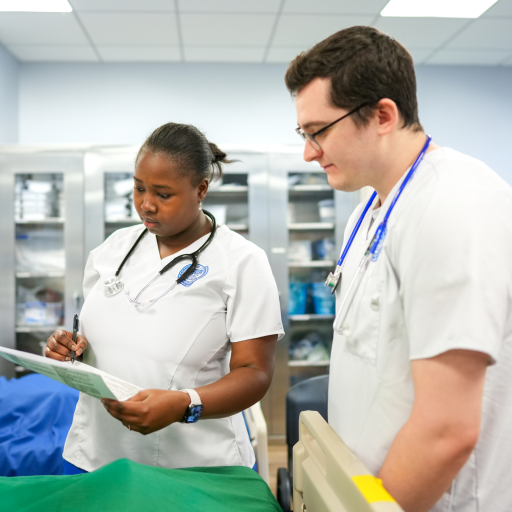
Nursing (RN)
Quincy College’s Associate in Science Degree in Nursing program is a blended, Nurse of the Future competencies and concept-based curriculum.
-

Nursing (LPN)
Become an LPN in 10 months with Quincy College’s accredited Practical Nursing (LPN) program, which offers clinical experience and comprehensive LPN ed
-
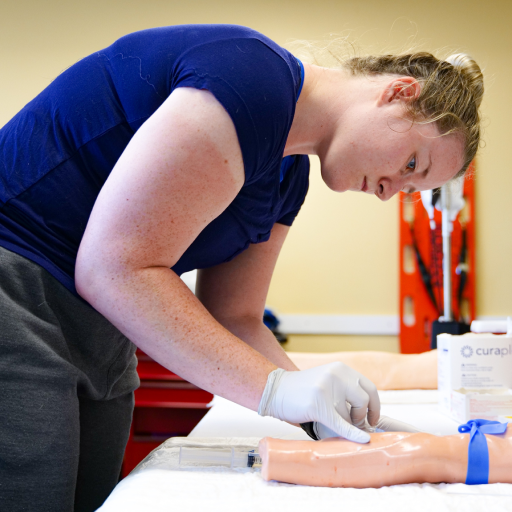
Phlebotomy Career Training Certificate
Enroll in our Phlebotomy Career Training Certificate program and gain essential skills in 10 weeks of classroom & practical phlebotomist training.
-

Pharmacy Technician
The Quincy College Pharmacy Technician program prepares students for employment in the pharmacy technician field.